

Certified Industrial & Food-Grade Starch Products
Direct factory supply manufactured under stringent CE, ISO, HACCP, and Halal quality assurance protocols. Engineered for exceptional peak viscosity, water retention, and thermal stability.
Industrial Analysis & Technological Development Trends
A comprehensive technical perspective on rheological innovations, clean-label modification, and agronomic starch optimization in modern food manufacturing.
1. Rheological Superiority of Potato Starch over Cereal and Tuber Alternatives
Potato starch (Solanum tuberosum) possesses unique physicochemical attributes that distinguish it from corn, wheat, and tapioca starches. The exceptionally high degree of polymerization in potato amylopectin molecules yields molecular weights reaching up to 108 Da. Furthermore, native potato starch contains esterified phosphate groups covalently bound to the C-3 and C-6 positions of the glucose residues within the amylopectin structure, granting it a natural anionic charge.
This natural phosphorylation contributes to several distinct performance advantages crucial for modern high-speed food production lines:
- Low Gelatinization Temperature: Potato starch gelatinizes within a lower thermal window (60°C – 65°C) compared to maize (70°C – 75°C), reducing thermal processing costs and preserving heat-sensitive flavor compounds.
- Peak Viscosity & Water Binding: Possessing a swelling power exceeding 100 g/g at 95°C, potato starch delivers rapid, high-peak Brabender viscosity at lower concentrations, creating rich pastes with superior clarity and neutral taste profiles.
- Retrogradation Resistance: The steric hindrance caused by negative phosphate charges prevents tight alignment of amylose chains, resulting in minimal syneresis and long-term freeze-thaw stability in frozen sauces, ready-meals, and processed meats.
Clean-Label Physical Modification
Global consumer preference is shifting rapidly away from chemically cross-linked (E1422, E1442) starches toward clean-label alternatives. Physical modification techniques—such as hydro-thermal treatment (HTT), annealment, and pre-gelatinization via drum drying—enable potato starches to withstand extreme thermal shear and acidic pH without requiring chemical reagents.
Pre-Gelatinized Cold-Water Swelling (CWS)
Instant starch technology eliminates the need for hot-water cooking in food plants. CWS potato starches swell immediately in cold liquids, providing instant viscosity for instant soups, bakery fillings, dry mix sauces, and cold-processed emulsion dressings with uniform particle dispersion.
Low-Fat Snack Extrusion & Matrix Binding
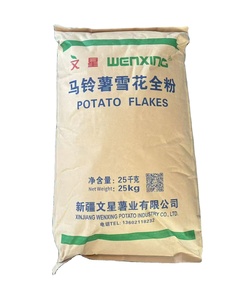
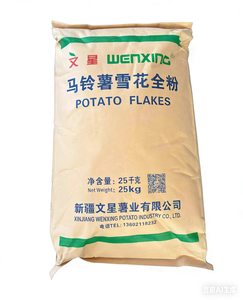
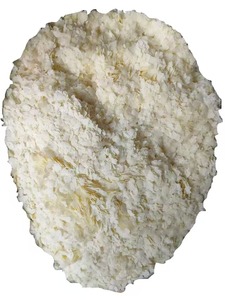
In the snack manufacturing sector, pre-mix potato starch powders and dehydrated potato flakes dictate dough elasticity and expansion ratio during high-pressure extrusion. Specialized potato starches optimize oil-barrier properties, reducing fat uptake during frying while maximizing crispiness retention in long fries and potato snack pellets.
Future B2B Procurement Trends & Global Supply Chain Outlook
Strategic risk mitigation, regulatory compliance, and agronomic security for multinational procurement directors and supply chain managers.
Geographic Supply Diversification & Xinjiang Agronomic Advantage
Recent climate volatilities and high energy costs across European potato growing belts (Duchy, Belgium, Germany, France) have introduced significant price inflation and supply unpredictability for global buyers. Procurement teams are increasingly establishing long-term off-take programs with Asian manufacturing centers.
Our farming and production base in Xinjiang, China offers strategic agronomic advantages:
- High Diurnal Temperature Variation: Abundant sunlight combined with cool nights promotes maximum starch synthesis in potato tubers, resulting in exceptionally high dry-matter content and amylopectin purity.
- Snowmelt Irrigation & Pristine Soil: Irrigated by natural Alpine snowmelt from the Tianshan mountain range, minimizing chemical pesticide reliance and eliminating industrial heavy-metal accumulation.
- Cost-Stable Processing Energy: Direct access to local energy infrastructure stabilizes drying costs, ensuring multi-year fixed pricing resilience against global market fluctuations.
Evolving Regulatory landscape & CE/EU Compliance
Industrial food manufacturers exporting to European, North American, and Middle Eastern markets face intensifying scrutiny regarding trace contaminants, allergen cross-contamination, and sustainability claims.
Key procurement mandates reshaping the potato starch supply chain include:
- Strict Heavy Metal & Pesticide Thresholds: Compliance with EU Regulation (EU) 2023/915 for contaminants in food, demanding rigorously audited laboratory CoAs for lead, cadmium, and arsenic per lot.
- CE Mark Certification & Machinery Standards: CE certification ensures that all production lines, automated starch extractors, and air-flow drying systems comply with strict European health, safety, and environmental protection standards.
- Zero Residue & Halal/Kosher Traceability: Complete segregated processing runs guaranteeing 100% pure potato origin, eliminating cross-contact with gluten, soy, or animal-derived processing aids.
Standardized Technical Specifications (Food-Grade & Industrial Potato Starch)
Comparative physical, chemical, and microbiological benchmark parameters guaranteed across standard production lots:
| Specification Parameter | Native Premium Starch | Modified Starch (E1422/E1442) | Dehydrated Potato Flakes |
|---|---|---|---|
| Starch Content (Dry Basis) | ≥ 99.0% | ≥ 97.5% | ≥ 82.0% |
| Moisture Content | ≤ 18.0% or ≤ 20.0% | ≤ 14.0% | ≤ 8.0% |
| Peak Viscosity (Brabender BU) | 1200 - 1800 BU | 800 - 1400 BU (Shear Stable) | Instant Hydration Paste |
| pH (10% Aqueous Solution) | 6.0 - 8.0 | 5.5 - 7.5 | 6.0 - 7.0 |
| Fineness (Pass Through Mesh) | 99.5% through 100 Mesh | 99.8% through 100 Mesh | 60 - 80 Mesh Flake/Granule |
| Sulphated Ash Content | ≤ 0.3% | ≤ 0.5% | ≤ 4.5% |
| Microbiological Profile | TPC < 10,000 cfu/g | TPC < 5,000 cfu/g | TPC < 10,000 cfu/g |
| Certifications & Standards | CE, ISO, HACCP, Halal, Kosher | CE, ISO, HACCP, Halal | CE, ISO, HACCP, Non-GMO |
Why Partner With Our Manufacturing Base?
Decades of specialized starch refining, rigorous agronomy control, and integrated logistics infrastructure designed to support enterprise-level manufacturing pipelines.
Full Traceability & Certification
Every lot harvested in Xinjiang is tracked from farm coordinates to final packaging. Supported by valid Certificate of Analysis (CoA), CE documentation, ISO 14001, HACCP, GMA-SAFE, Kosher, and Halal transaction certificates.
Advanced Automated Extraction
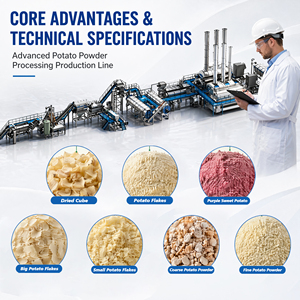
Utilizing high-yield continuous hydrocyclone separation systems, our automated sweet potato and potato starch production lines achieve an industry-leading 98% extraction yield with optimized water recycling and low energy consumption.
Strategic Bulk Warehousing & Delivery
We hold buffer safety stock across regional food-grade warehouses in global transit hubs. Offering flexible packaging configurations including 25kg multi-wall valve bags, 500kg jumbo totes, and 1,000kg bulk export containers.
Frequently Asked Sourcing & Technical Questions
Direct answers regarding documentation, minimum orders, product customisation, and global export procedures.
Ready to Secure Premium CE Certified Starch Supply?
Contact our technical commercial sales team today to request product samples, baseline CoAs, or multi-container price quotations for your manufacturing facilities.