

Sustainably farmed crop rows supplying organic food ingredients

Organic Ingredients Blog & Insights

Expert knowledge from a family-owned ingredient supplier with 15+ years of experience.

Sourcing Intelligence For Procurement Teams

USDA Organic, Non-GMO and natural ingredient guidance.

From Farm To Your Formulation

Tapioca, corn, rice and cane sugar ingredient deep dives.

0%

Choosing Organic Rice Protein can help brands build plant-based products with a clear ingredient story and a familiar grain source. It may suit protein powders, snack bars, and other formulations, but the ingredient should be assessed in the finished recipe—not just on a specification sheet. Taste matters. A mild, earthy note can work in chocolate or cinnamon blends, yet stand out in a lightly flavored drink. Texture matters, too. Fine powders may mix differently from coarser ones, and results can change with liquid, sweeteners, and processing.

A useful evaluation begins with supplier documents. Review the protein content, amino acid information, processing details, and applicable organic certification. Confirm how the supplier manages consistency between batches. Rice protein can have a lower lysine content than some other protein sources, so the overall protein blend may need careful formulation. No single ingredient is perfect. That is worth remembering when comparing claims with product performance. Bench testing can reveal settling, grittiness, flavor changes, or weaker binding before a launch. Small details count.

For product teams, the best choice balances nutrition goals, taste, cost, and reliable supply. Ask for samples and test them under realistic conditions, such as a shaker bottle or baked bar. Check whether the finished product meets its intended serving and labeling requirements in each target market. Organic Rice Protein may be a strong fit, but its value depends on the formula around it. A measured decision is more credible than a broad promise.
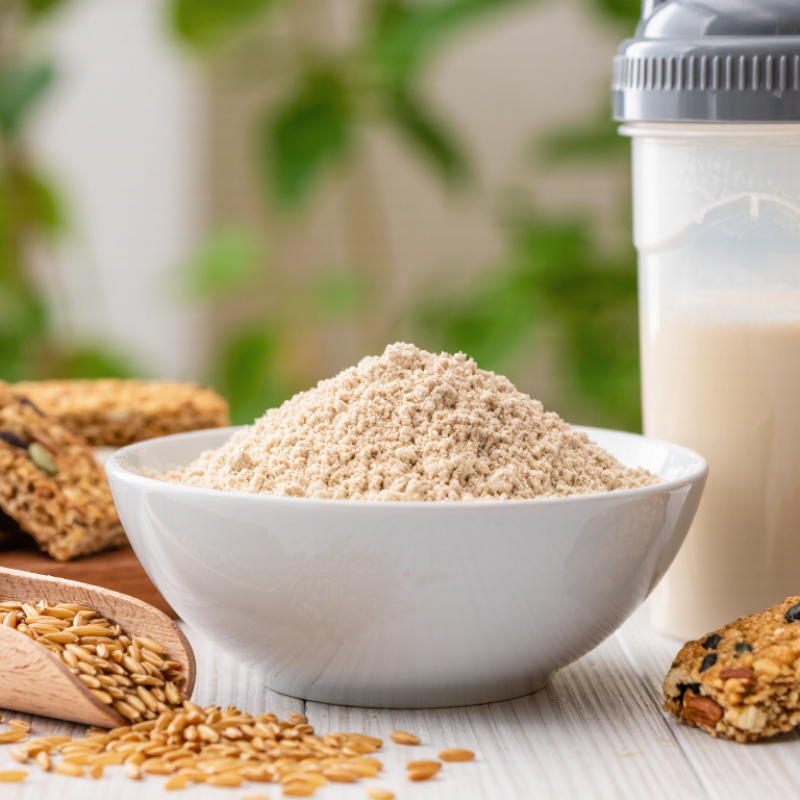
Why Choose Organic Rice Protein for Your Products?

What Organic Rice Protein Is and How It Is Defined

Organic rice protein is a protein-rich ingredient produced by separating protein from rice, commonly through milling and additional processing. “Organic” describes how the rice was grown and handled, not a guaranteed protein percentage, amino-acid profile, or processing method. Under the USDA National Organic Program, certified organic production follows defined standards and requires verification through an accredited certifier. Requirements can differ by market, so buyers should check which certification applies.

That distinction matters in product development. A pale powder may look uniform, yet its solubility, flavor, and protein content can vary with the rice and processing conditions. Ask suppliers for current certificates, lot-specific specifications, and test results; do not rely on the word “organic” alone. A certificate is useful, but it does not replace product testing. The label alone is not enough.

The wider organic sector provides context, not proof of demand for this particular ingredient. FiBL and IFOAM’s The World of Organic Agriculture 2024 reported 96.4 million hectares of organic farmland worldwide in 2022, with organic food and drink sales reaching about €135 billion. Those figures describe the sector broadly. They cannot tell a formulator whether a given rice protein will work in a drink, bar, or baked product. A small bench trial can reveal what a spreadsheet misses.

How Organic Rice Protein Is Produced and Certified

Organic rice protein begins with rice grown under an approved organic farming system. After harvest, the grain is cleaned and milled, then processed to separate much of its starch from its protein. Depending on the manufacturer, enzymes or other permitted processing aids may help with separation. The protein fraction is then dried and milled into a fine powder. Details matter. Processing methods can affect color, flavor, solubility, and protein content, so product specifications should be checked rather than assumed.

Certification follows the supply chain, not just the crop. An independent certifier typically reviews farm and processor records, checks handling practices, and may inspect facilities. Organic ingredients must be kept identifiable and protected from mix-ups during storage and production. Requirements vary by market and certification scheme. Ask suppliers for current certificates, product specifications, and batch-level test documents; confirm that the certificate covers the ingredient and relevant processing site. This step is easy to overlook. A certificate alone may not answer every quality question, and organic status does not guarantee a particular amino acid profile or performance in a recipe. Testing and small-scale trials help reveal those differences.

Its Nutritional Profile and Functional Properties

Organic rice protein can provide a plant-based source of protein with a mild, grain-like flavor. Its amino acid profile includes all essential amino acids, though lysine is typically present in smaller amounts than in some other protein sources. Formulators may pair it with complementary proteins, such as pea protein, to balance the overall amino acid profile. Organic describes how the rice is grown and processed under applicable standards; it does not, by itself, guarantee higher protein quality or a particular nutritional advantage. Worth keeping in mind.

Its functional behavior depends on the ingredient’s processing and particle size. In a smoothie or powdered drink, fine-milled rice protein can blend into a soft, neutral base, but some versions feel sandy or settle after mixing. In baked goods, it can add protein and absorb moisture, which may leave a denser crumb if the liquid balance is not adjusted. A small test batch helps reveal these differences before production. Rice protein is useful, but not effortless. Check texture, solubility, and flavor in the finished recipe rather than relying only on the nutrition panel.

Product Categories That Use Organic Rice Protein

Organic rice protein fits products where a plant-based ingredient needs a mild flavor and practical versatility. Common applications include protein powders, ready-to-mix shakes, nutrition bars, baked goods, breakfast cereals, and some dairy-style or meat-alternative products. Each category has different demands: powders need easy dispersion, while bars need a texture that stays pleasant after mixing with syrups, nuts, or dried fruit. The fit is not automatic. Rice protein can feel dry or slightly gritty, so bench testing matters.

The Good Food Institute and SPINS reported that U.S. retail sales of plant-based foods reached $8.1 billion in 2023. This figure covers a broad food category, not rice protein specifically, but it shows the scale of the market these products serve. For formulators, organic rice protein can support plant-based positioning in snacks and beverages, especially when paired with ingredients that improve flavor and mouthfeel. In a shake, for example, cocoa or fruit can soften earthy notes; in a bar, added moisture may help reduce crumbling. Check the protein level, taste, solubility, and organic documentation for the finished product—not just the ingredient sample.

Tips: Test it in the actual recipe. Small changes in liquid, sweetener, or particle size can shift texture more than expected. Keep a control batch; it makes comparisons easier.

Key Factors for Selecting Organic Rice Protein for Products

Selecting organic rice protein starts with the product’s purpose, not the ingredient label. A powder for smoothies may tolerate a mild grain-like note; a clear beverage may not. Check the protein level, amino acid profile, and flavor in the finished recipe. Organic sourcing does not automatically mean higher protein or better performance. Details matter.

Ask suppliers for current organic certificates, batch specifications, and test results for contaminants and microbiological quality. Standards vary by market, so verify that documentation matches your sales regions. Review consistency between batches, too. A small shift in color or taste can be noticeable in a pale drink. Test it.

Processing can affect solubility, texture, and flavor. Rice protein may feel gritty in thin liquids, while added fats or stabilizers can change the result. Run bench trials at realistic serving sizes, then leave the formula overnight and check for settling. It is easy to overlook. Also assess packaging, shelf life, and supply reliability before committing. Organic status is one useful criterion, but it cannot replace practical testing or clear product specifications. If the first sample works only after extensive masking, reconsider whether it suits the product.

FAQS

What is organic rice protein?

It is protein separated from rice through milling and further processing. “Organic” describes how the rice was grown and handled, not its protein level.

Does organic status guarantee a specific protein content?

No. Protein levels and amino-acid profiles can vary. Check the batch specification.

What documents should buyers request?

Request a current organic certificate, lot-specific specifications, and test results. Confirm the certification suits each sales market.

Does certification prove product quality?

No. A certificate verifies organic requirements, but it does not replace product testing. The label alone is not enough.

How can rice protein affect a drink?

It may add a grain-like flavor or gritty texture, especially in thin liquids. A pale drink can reveal small color changes.

What should a bench trial include?

Test realistic serving sizes and check taste, texture, and solubility. Leave a sample overnight and look for settling. Easy to miss.

Does organic rice protein work in every product?

No. A smoothie may tolerate a mild grain note, while a clear beverage may not. If extensive masking is needed, reconsider the fit.

Do organic market figures prove demand for rice protein?

No. Broad organic sales and farmland figures describe the sector, not demand for this ingredient. I might be overreading those numbers.

Conclusion

Organic Rice Protein is a plant-based protein ingredient made from rice and produced under organic standards. Its production typically involves processing rice to separate protein from other components, followed by steps such as drying and quality checks. Organic certification helps verify that the ingredient meets applicable requirements for organic production and handling, while clear documentation can support product transparency.

Its nutritional profile and functional properties make Organic Rice Protein a potential choice for a range of foods, beverages, and nutrition products. Depending on its specifications, it may contribute protein and provide characteristics such as dispersibility, texture, or mild flavor. When selecting it, manufacturers can assess protein content, ingredient composition, taste, solubility, processing performance, certification records, and consistency between batches. Matching these factors to the product’s intended use can help ensure the ingredient fits both formulation needs and consumer expectations.

Amelia

Amelia

Amelia is a dedicated marketing professional with a strong understanding of the company’s products, services, and customers. With a background in market research, content strategy, and business communication, she translates complex product information into clear, practical, and engaging insights.......