An Organic Ingredients Supplier connects certified farms, processors, and product manufacturers. The supplier may provide herbs, oils, grains, plant extracts, sweeteners, or natural colors. More importantly, it manages evidence behind those materials.
Wendell Berry, a respected food and farming authority, wrote, “Eating is an agricultural act.” His words also describe ingredient sourcing. Every purchase can affect soil care, farming communities, processing methods, and consumer trust. A capable Organic Ingredients Supplier should explain where ingredients were grown and how they were handled after harvest. Details matter.
Reliable suppliers normally maintain organic certificates, product specifications, allergen statements, and certificates of analysis. Lot numbers should connect each shipment with a documented production record. Buyers may also review pesticide controls, storage conditions, testing procedures, and audit histories. Requirements can differ between markets, so experienced suppliers avoid vague promises. They confirm the applicable standards before making a claim.
A physical example is simple. A bag of organic turmeric should arrive with a lot code, production date, country of origin, and moisture information. Its records should support the material’s identity and quality. That matters.
No supplier is flawless. Documentation can contain gaps, certificates can expire, and seasonal crops can vary in color or aroma. Careful buyers ask difficult questions and verify answers. An Organic Ingredients Supplier earns credibility through transparent records, consistent communication, and honest limits. The label is only one part of the story. The supply chain deserves closer attention.
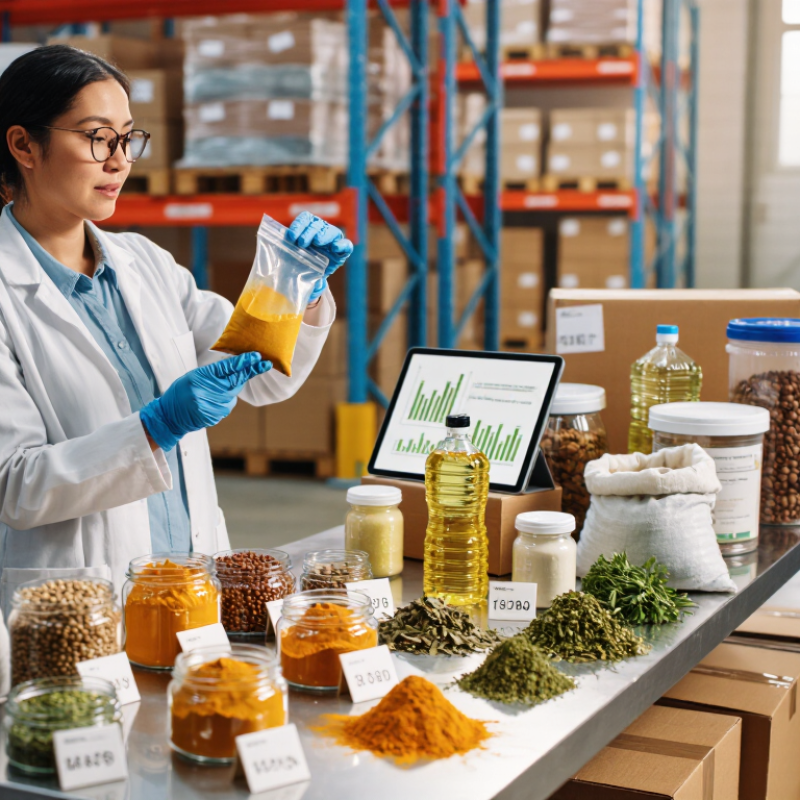
What an Organic Ingredients Supplier Is and How It Serves Manufacturers
What Is an Organic Ingredients Supplier?
An organic ingredients supplier sources, verifies, stores, and delivers certified organic materials for manufacturers. These materials may include plant extracts, grains, oils, spices, or functional powders. The supplier checks certification status, country of origin, processing methods, and handling conditions. Details matter. A reliable supplier also provides specifications, allergen statements, safety data, and batch-specific certificates of analysis.
For manufacturers, the supplier is more than a purchasing contact. It helps match an ingredient to a product formula, production scale, target texture, and shelf-life requirement. A food producer may need a fine powder that disperses evenly in a beverage. A personal-care manufacturer may require an oil with stable color and a controlled odor. Suppliers coordinate packaging, minimum order quantities, temperature requirements, and delivery schedules.
Traceability is central to the relationship. Each batch should connect to documented farms, processors, storage sites, and shipment records. This evidence supports internal quality reviews and organic labeling decisions, which can differ between markets. Supplier audits, sample testing, and clear communication reduce avoidable problems. Still, no supply chain is perfect. Harvest conditions change, documents arrive late, and natural ingredients can vary slightly. Small errors spread. Experienced suppliers flag uncertainty instead of hiding it, then work with manufacturers on testing, replacement materials, or revised specifications. Manufacturers should also review every claim and document before production, rather than relying on a supplier’s assurance alone.
USDA Organic Labeling Requires at Least 95% Certified Organic Content
What Is an Organic Ingredients Supplier?
USDA Organic Labeling Requires at Least 95% Certified Organic Content
An organic ingredients supplier provides raw materials that meet recognized organic production standards. These materials may include grains, oils, herbs, sweeteners, or plant extracts. A reliable supplier should provide current certificates, lot details, and traceable sourcing records. Documentation matters as much as the ingredient itself.
Under USDA organic labeling rules, a product labeled “organic” must contain at least 95% certified organic ingredients, excluding water and salt. The remaining ingredients must be approved for organic use under the applicable regulations. A certified organic handler or processor must also verify production, storage, and processing practices. Small paperwork errors can create large compliance problems.
In my experience, supplier evaluation works best when records are checked against physical shipments. The certificate name, ingredient description, and lot number should match. They do not always match perfectly. That requires careful questioning, not quick approval. A spreadsheet may look complete while an expired certificate sits unnoticed. Buyers should confirm renewal dates, processing aids, allergen controls, and contamination prevention procedures. Strong suppliers answer clearly and provide evidence without hiding uncertainty. When a supplier cannot explain how the 95% threshold is calculated, the purchasing team should pause and investigate.、】【
What Is an Organic Ingredients Supplier? - USDA Organic Labeling Requires at Least 95% Certified Organic Content
| Labeling Category |
Minimum Organic Content |
USDA Organic Seal |
Supplier and Product Requirements |
Typical Ingredient Documentation |
| 100% Organic |
100% organic ingredients, excluding added water and salt |
Permitted |
Every agricultural ingredient must be certified organic. The product must comply with applicable USDA organic production and handling standards. |
Current organic certificates, supplier transaction records, ingredient specifications, and lot traceability records |
| Organic |
At least 95% organic ingredients, excluding water and salt |
Permitted |
The remaining ingredients must be allowed under USDA organic regulations. Non-organic agricultural ingredients generally must appear on the National List of Allowed and Prohibited Substances. |
Organic certificates for certified ingredients, non-organic ingredient compliance statements, formulation records, and percentage calculations |
| Made With Organic |
At least 70% certified organic ingredients |
Not permitted |
The product may identify up to three organic ingredients or organic ingredient categories on the principal display panel. The remaining ingredients must comply with applicable requirements. |
Organic certificates, product formulation, ingredient percentage calculations, and records supporting the named organic ingredients |
| Products Containing Organic Ingredients |
Less than 70% certified organic ingredients |
Not permitted |
The product cannot make an organic claim on the main product label, but individual certified organic ingredients may be identified in the ingredient statement. |
Organic certificates for individual ingredients, ingredient statements, purchase records, and supplier verification documents |
| Certified Organic Ingredient |
The ingredient must meet the applicable organic standard for its production and handling |
The finished-product seal depends on the product's overall organic category |
An organic ingredients supplier provides agricultural or processed ingredients produced, handled, packaged, and documented according to applicable organic requirements. |
Certificate issued by a USDA-accredited certifying agent, scope of certification, product list, lot number, and transaction certificate when applicable |
| USDA-Accredited Certification |
Required when an operation must be certified under USDA organic rules |
Certification supports eligibility; seal use also depends on the final product category and labeling compliance |
Certification is performed by certifying agents accredited by the United States Department of Agriculture. Suppliers must maintain records that demonstrate compliance and traceability. |
Valid certificate, annual inspection records, organic system plan, supply-chain records, and corrective-action documentation when applicable |
Note: The organic percentage thresholds above are based on USDA organic labeling categories. Water and salt are excluded from organic-content calculations because they cannot be certified as organic.
Global Supply Context: 96.4 Million Hectares Were Organic in 2022
What is an organic ingredients supplier? It is a company that sources, verifies, stores, and delivers certified organic materials. These may include grains, herbs, oils, extracts, or plant-based powders. A reliable supplier should provide current certificates, lot numbers, origin records, and testing documents. Certification rules can differ between markets, so one certificate may not cover every shipment or destination.
The global scale is substantial.
According to the Research Institute of Organic Agriculture and IFOAM Organics International’s 2024 edition of The World of Organic Agriculture, 96.4 million hectares were managed organically in 2022. The report also recorded about 4.5 million organic producers worldwide. These figures show a broad supply base, but they do not guarantee equal quality or dependable logistics. Acreage can hide regional gaps, seasonal shortages, and inconsistent processing capacity. Measurement is imperfect.
Professional buyers should examine the full chain, not only the certificate. Ask where the crop was grown, when it was harvested, and how it was processed. Confirm segregation from conventional materials during storage and transport. Independent residue testing can add useful evidence, especially for sensitive ingredients. Small details matter. A supplier that answers slowly or cannot match a lot number to its records deserves closer review. Organic growth is real, yet responsible sourcing still requires practical verification.
Supplier Verification: Certificates, COAs, Audits, and Traceability
What Is an Organic Ingredients Supplier?
An organic ingredients supplier does more than sell certified materials. It must prove identity, organic status, safety, and consistent handling. Scale makes this essential. The Organic Trade Association’s 2024 Organic Industry Survey reported US organic sales of $67.6 billion in 2023. The European Commission also reported 16.9 million hectares of organic farmland in 2022. More volume means more verification pressure.
Start with the certificate. Check the certifier, product scope, processing site, issue date, and expiry date. A valid certificate may not cover every ingredient or facility. The certificate should match the invoice and shipment documents. The COA should identify the lot, test methods, results, specification limits, and laboratory details. Missing lot numbers create avoidable doubt. A polished document is not enough.
Audits should examine receiving records, segregation controls, cleaning procedures, pest management, and employee training. Traceability should work backward to the farm or processor and forward to each customer shipment. Ask for a mock recall record. It should connect one lot to purchase orders, production records, warehouse movements, and delivery notes. No system is flawless. Records can conflict, especially during manual updates. That weakness deserves honest review, not polite approval. Supplier verification becomes reliable when certificates, COAs, audits, and traceability tell the same story.
Market Relevance: U.S. Organic Sales Reached $67.6 Billion in 2023
What Is an Organic Ingredients Supplier?
Market Relevance: U.S. Organic Sales Reached $67.6 Billion in 2023
An organic ingredients supplier provides certified agricultural inputs for food, beverage, and personal care production. These inputs may include grains, oils, spices, sweeteners, or botanical extracts. The Organic Trade Association reported $67.6 billion in U.S. organic sales in 2023. Organic food represented approximately $63.8 billion of that total. This figure shows strong demand, but it also raises sourcing expectations.
Reliable suppliers connect market demand with controlled agricultural production. They should verify current organic certificates, approved handling processes, and shipment records. The USDA National Organic Program sets the core production and handling standards in the United States. A careful supplier also checks lot codes, storage temperatures, and packaging condition. Small details matter. A damaged pallet can create real questions about product integrity.
Professional experience reveals an uncomfortable point: certification alone does not prove every shipment was handled perfectly. Documents can be current while warehouse practices remain inconsistent. Buyers should compare certificates with invoices, test reports, and traceability records. The OTA’s 2024 Organic Industry Survey offers valuable market context, yet market growth does not remove operational risk. Suppliers must keep improving their controls, especially when ingredients cross borders or pass through multiple facilities. That work is less visible, but it often determines whether an organic claim remains credible.
Conclusion
An Organic Ingredients Supplier provides certified organic raw materials to manufacturers that produce food, beverages, cosmetics, supplements, and other consumer products. These suppliers help manufacturers source ingredients that meet organic production standards while supporting consistent quality, documentation, and dependable delivery. Under USDA organic labeling rules, a product generally must contain at least 95% certified organic content to use the primary organic designation, making accurate sourcing and certification essential.
The global organic sector continues to expand, with approximately 96.4 million hectares managed organically in 2022 and U.S. organic sales reaching $67.6 billion in 2023. To verify ingredient integrity, manufacturers commonly review organic certificates, certificates of analysis (COAs), audit records, and traceability documents covering the supply chain from origin to final shipment. By combining regulatory knowledge, transparent records, and reliable logistics, an Organic Ingredients Supplier helps manufacturers meet market expectations and develop products with credible organic claims.