Organic Ingredients Blog & Insights
Expert knowledge from a family-owned ingredient supplier with 15+ years of experience.
Sourcing Intelligence For Procurement Teams
USDA Organic, Non-GMO and natural ingredient guidance.
From Farm To Your Formulation
Tapioca, corn, rice and cane sugar ingredient deep dives.
Top 10 Regenerative Organic Cane Sugar Suppliers?
Table of Contents
Demand for Regenerative Organic Cane Sugar is growing among food brands, retailers, and responsible ingredient buyers. Yet supplier selection requires more than comparing prices or polished sustainability claims. Soil restoration, farmer welfare, traceability, and dependable processing standards all deserve close attention.
This guide introduces ten suppliers connected with regenerative organic cane sugar and examines what makes each one worth considering. The review focuses on certification evidence, farming practices, sourcing regions, production capacity, packaging options, and supply-chain transparency. Recognized organic and regenerative certifications can provide useful assurance, but certificates alone do not tell the whole story. Buyers should request current documentation, audit details, laboratory specifications, and shipment records before making a contract decision.
Small details matter. Can the supplier identify the farm or cooperative behind each batch? Does the sugar arrive with consistent color, moisture, and crystal size? Are farmers paid through clear and fair purchasing arrangements? These questions reveal operational quality more effectively than attractive marketing language.
No ranking remains perfect for every buyer. A bakery may prioritize fine granulation, while a beverage company may need stable bulk deliveries. Some suppliers publish strong environmental data but offer limited regional availability. Others provide reliable logistics yet explain regenerative outcomes less clearly. That gap deserves reflection. The strongest choice depends on verified evidence, realistic volume requirements, and the buyer’s own standards. This overview is designed to support careful comparison, not replace independent due diligence.
What Is Regenerative Organic Cane Sugar?
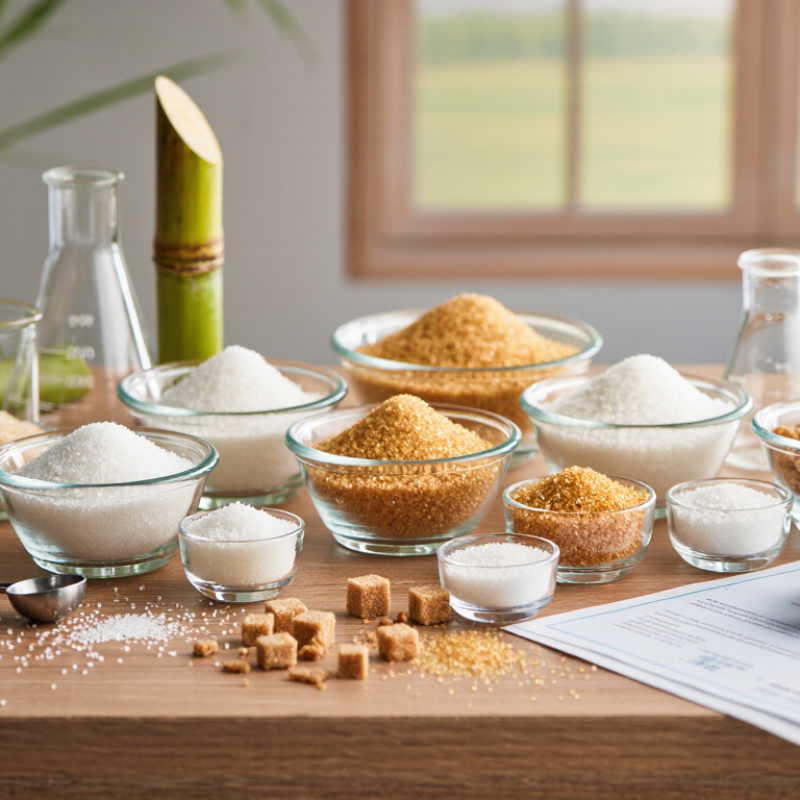
Regenerative organic cane sugar comes from sugarcane grown under organic rules with added soil and social requirements. Unlike conventional organic certification, regenerative systems focus on rebuilding living soil, protecting biodiversity, and reducing erosion. Farmers may use cover crops, compost, crop rotation, buffer zones, and reduced soil disturbance. These practices can leave fields greener between harvests, not bare and dusty.
The Regenerative Organic Certified framework combines organic production, soil health, animal welfare, and social fairness. However, “regenerative” still lacks one globally harmonized legal definition. That matters. A supplier should provide farm-level records, certification details, chain-of-custody evidence, and transition dates.
The World of Organic Agriculture 2024 reported 96.4 million hectares of organic farmland worldwide in 2022, showing strong market growth but not proving regenerative performance.
Sugarcane-specific evidence remains uneven. I would question any claim without measured soil carbon, erosion, water use, and biodiversity data. USDA soil-health guidance links increased organic matter with better water retention, yet results depend on climate, soil type, and management.
The honest answer is less polished: regenerative organic sugar can support healthier landscapes, but certification and transparent measurements still matter more than attractive wording.
How to Evaluate Regenerative Organic Sugar Suppliers
When evaluating regenerative organic cane sugar suppliers, start with evidence, not polished claims.
Request current organic certification, regenerative program records, and audit dates. Check whether certification covers the farms, mill, and finished sugar. A certificate limited to one stage can mislead buyers.
Ask for farm-level details.
Look for cover crops, compost use, reduced soil disturbance, buffer zones, and water monitoring. Soil tests should show measurable changes over time, not just attractive photographs. Reliable suppliers can explain cane origin, harvest season, processing location, and batch tracking. Request a sample chain-of-custody document. It should connect a shipment to a specific production lot.
Worker welfare also matters.
Review labor policies, grievance procedures, and independent audit results. Environmental progress should not hide unsafe working conditions. Speak with the quality manager, not only a salesperson. Their answers reveal practical knowledge. Ask how they handle contamination, storage humidity, pest control, and transportation delays.
Sugar can absorb odors quickly.
Price deserves careful attention.
Regenerative farming may require transition costs, but a premium alone proves nothing. Compare testing, certification, farm support, and delivery reliability. I would keep a scoring sheet for ten potential suppliers. Weight traceability and verified practices heavily. Leave room for uncertainty. Some suppliers may provide excellent records but limited soil data, while others may show strong field results without consistent documentation. That gap needs follow-up, not automatic rejection. Supplier evaluation is rarely perfect.
Top 10 Regenerative Organic Cane Sugar Suppliers
Choosing the top 10 regenerative organic cane sugar suppliers requires more than comparing prices. A credible supplier should provide valid organic certification, regenerative agriculture evidence, and batch-level traceability. Look for sugar sourced from farms using cover crops, compost, reduced tillage, and careful water management. Soil improvement should be measured, not merely advertised.
A strong supplier also shares recent laboratory reports, harvest details, processing locations, and worker welfare policies. Reliable documents should identify the cane’s origin and explain how custody is maintained during refining and packing. Product consistency matters too. Granule size, color, moisture, and flavor can affect bakery, beverage, and confectionery production. Samples should be tested before a large purchase.
No ranking is perfect. A smaller cooperative may protect soil better than a larger exporter, yet offer limited shipping capacity. Another supplier may hold respected certifications but provide weak environmental data. This is where careful questioning matters. Ask for audit dates, farm participation rates, carbon measurement methods, and corrective-action records. Buyers should also confirm import rules and food-safety requirements in their destination market. Claims deserve evidence. Some do not hold up. A thoughtful top-ten list should therefore balance regenerative results, organic compliance, transparency, supply reliability, and practical performance rather than choosing the cheapest quotation.
Supplier Certifications, Farming Practices, and Product Quality
Organic cane sugar sourcing begins with evidence, not glossy claims. Ask suppliers for current organic certificates, audit scope, transaction records, and farm-level maps. Certificates should cover growers, mills, storage, and export handling. FiBL’s 2024 World of Organic Agriculture report recorded 96.4 million organic hectares globally in 2022. That figure signals growth, but not automatic integrity. Organic acreage can still hide weak separation or incomplete conversion records. Look for soil cover, compost use, biological pest management, water protection, and controlled burning policies. Reporting must distinguish certified fields from transition fields.
Product quality needs measurable specifications. Request recent certificates of analysis covering sucrose, moisture, ash, color, microbiology, pesticide residues, and heavy metals. Use a recognized color scale, such as ICUMSA, and define acceptable ranges before purchasing. FAOSTAT’s Crops and Livestock Products database reports more than two billion tonnes of annual sugarcane production. Large volume does not guarantee consistency. Sampling at loading matters. Inspect packaging seals, lot codes, foreign-material controls, and warehouse humidity. One uncomfortable weakness remains: smaller farms may lack testing funds, while paperwork can look complete. Independent verification and retained samples reduce that blind spot.
Tips: Compare certificate numbers directly with issuing databases. Trace one lot back to a field. Request corrective-action records, not promises. Taste and dissolve samples in plain water; aroma, crystal uniformity, and sediment reveal practical differences. Recheck documents annually, because a former audit is not current proof.
| Rank | Anonymous Supplier Profile | Primary Cane-Growing Region | Relevant Certification Evidence to Verify | Regenerative Farming Practices | Soil and Biodiversity Indicators | Processing and Traceability Controls | Product Quality Information | Commercial Suitability |
|---|---|---|---|---|---|---|---|---|
| 1 | Supplier Profile 01 | Brazil | Organic scope certificate ROC pathway Bonsucro evidence | Reduced tillage, green-cane harvesting, compost or filter-cake application, cover crops, and reduced synthetic-input use. | Soil organic-carbon testing, riparian-buffer protection, erosion monitoring, and habitat restoration records. | Segregated organic lots, mass-balance or identity-preserved records, internal traceability testing, and documented sanitation controls. | Unrefined or minimally refined cane sugar; specification should confirm moisture, color, polarity, ash, and microbiological limits. | Suitable for food manufacturers seeking large-volume organic supply with documented environmental programs. |
| 2 | Supplier Profile 02 | Paraguay | USDA Organic EU Organic Fairtrade option | Organic weed management, crop-residue retention, diversified rotations where feasible, and biological soil amendments. | Organic-matter monitoring, soil-cover targets, waterway buffers, and restrictions on prohibited agrochemicals. | Farm-to-mill lot identification, certified-organic handling procedures, batch coding, and supplier-chain documentation. | Common formats include golden, light brown, and dark brown organic cane sugar; color and crystal size must be confirmed by specification. | Well suited to retail, bakery, beverage, and ingredient applications requiring certified organic documentation. |
| 3 | Supplier Profile 03 | India | India Organic or NPOP USDA Organic Fairtrade option | Intercropping, farmyard manure, composting, biological pest management, and controlled irrigation practices. | On-farm biodiversity measures, soil testing, water-use records, and documented exclusion of prohibited inputs. | Certified-organic processing, supplier approval procedures, batch sampling, foreign-material controls, and export documentation. | Jaggery, panela-style, muscovado-style, and crystallized organic cane sugars may be available; moisture and microbiological limits require confirmation. | Appropriate for specialty, natural-food, and ethically sourced product lines with moderate or varied pack sizes. |
| 4 | Supplier Profile 04 | Mauritius | EU Organic USDA Organic Sustainable agriculture audit | Residue management, compost use, integrated pest management, efficient irrigation, and protection of sensitive coastal areas. | Soil-fertility plans, erosion-control measures, water-quality monitoring, and biodiversity-protection commitments. | Mill-level quality systems, documented cane reception, lot segregation, laboratory testing, and export traceability. | Light, golden, and specialty brown sugars may be offered; buyers should verify polarity, moisture, color units, and particle-size distribution. | Suitable for premium foodservice, retail, and ingredient buyers prioritizing origin transparency and consistent processing. |
| 5 | Supplier Profile 05 | Philippines | USDA Organic EU Organic Fairtrade option | Mixed-cropping systems, compost and manure use, reduced herbicide dependence, and use of crop residues as soil cover. | Farm soil tests, buffer zones, erosion-reduction practices, and community-based watershed protection. | Cooperative-level records, organic producer-group controls where applicable, batch identification, and pre-shipment inspection. | Raw, muscovado-style, and minimally refined products may be available; confirm moisture activity, ash, color, and microbiological specifications. | Good fit for specialty sweeteners, natural food products, and social-impact procurement programs. |
| 6 | Supplier Profile 06 | Colombia | USDA Organic EU Organic Bonsucro evidence | Contour planting, cover crops, organic amendments, integrated pest management, and reduced soil disturbance. | Carbon and soil-health baselines, watershed protection, pollinator habitat, and erosion-monitoring records. | Farm-to-mill traceability, certified-organic segregation, HACCP-based controls, and routine contaminant testing. | Granulated, powdered, and panela-style organic cane sugar formats may be offered; product form, color, and flowability should be specified. | Suitable for beverage, bakery, confectionery, and private-label applications requiring dependable documentation. |
| 7 | Supplier Profile 07 | Australia | Australian Certified Organic USDA Organic Bonsucro evidence | Precision irrigation, controlled traffic, minimum tillage, nutrient budgeting, and integrated pest management. | Soil-carbon measurement, salinity management, water-efficiency records, and habitat or riparian-area protection. | High-capacity milling, documented food-safety systems, lot coding, laboratory release testing, and export compliance procedures. | Consistent granulated organic sugar is typically the key offer; confirm color, crystal size, moisture, polarity, and packaging format. | Strong option for industrial buyers that prioritize supply continuity, standardized specifications, and audit readiness. |
| 8 | Supplier Profile 08 | Mexico | USDA Organic EU Organic Fairtrade option | Intercropping, compost application, biological pest control, reduced tillage, and water-conservation measures. | Soil-cover monitoring, organic-matter testing, reforestation or buffer projects, and protection of local water resources. | Cooperative traceability, certified-organic handling, batch testing, allergen controls, and documented packaging hygiene. | Brown, raw, and minimally refined cane sugar formats may be available; verify color, moisture, invert sugar, ash, and microbiological limits. | Appropriate for North American and specialty-market buyers seeking regional proximity and flexible product formats. |
| 9 | Supplier Profile 09 | Thailand | Thai organic certification USDA Organic EU Organic | Rice-cane or legume rotation where practical, composting, residue management, biological controls, and efficient irrigation. | Soil-fertility plans, water-use monitoring, field-buffer maintenance, and restrictions on prohibited substances. | Integrated mill controls, lot segregation, moisture and color testing, traceability documentation, and export-quality inspection. | Organic granulated and golden cane sugars may be offered; confirm crystal size, color, moisture, caking tendency, and packaging requirements. | Suitable for Asian food, beverage, bakery, and ingredient supply chains requiring certified-organic products. |
| 10 | Supplier Profile 10 | South Africa | South African organic certification USDA Organic Sustainable agriculture audit | Conservation agriculture, green-cane harvesting, compost or filter-cake use, integrated pest management, and water stewardship. | Soil-carbon or organic-matter monitoring, wetland protection, erosion control, and biodiversity-management plans. | Mill traceability, organic-lot segregation, food-safety management, contaminant screening, and documented chain-of-custody controls. | Raw and brown organic cane sugar formats may be available; buyers should confirm polarity, moisture, color, ash, and microbiological criteria. | Best suited to buyers seeking African origin, transparent sustainability programs, and specialty or regional supply. |
How to Choose the Right Supplier for Your Needs
Choosing among the top ten regenerative organic cane sugar suppliers requires more than comparing prices. Ask how each supplier defines “regenerative.” Credible answers should include soil-building practices, reduced disturbance, cover crops, biodiversity, and measurable farm outcomes. Request current organic certificates, third-party audit records, and a clear chain of custody from farm to warehouse.
Order samples before signing a long contract. Check color, crystal size, aroma, moisture, and dissolution in your actual recipes. Review the certificate of analysis for every lot, including microbiological and contaminant testing. Confirm minimum order quantities, lead times, storage conditions, and lot-level traceability. A supplier should explain what happens during a delayed shipment or quality dispute.
Speak with the quality manager, not only a sales representative. Ask how farms are monitored and how corrective actions are recorded. Responsible suppliers can discuss worker protections, water management, and transparent pricing without vague promises. A polished sustainability page is not proof. I have seen impressive claims weaken when batch records were incomplete, so leave room for verification. Compare three quotations, but weigh consistency, evidence, and communication above the lowest offer. Your best supplier may not be the cheapest; it should be the one that reliably meets your specifications and can prove each claim.
FAQS
It comes from sugarcane grown under organic rules with added soil and social requirements. The system aims to rebuild living soil, protect biodiversity, and reduce erosion.
Farmers may use cover crops, compost, crop rotation, buffer zones, and reduced soil disturbance. Fields may stay greener between harvests.
No. Organic certification alone does not prove improved soil, water, or biodiversity results. Measured evidence still matters.
Request current organic certificates, farm records, audit dates, and chain-of-custody documents. Ask for soil carbon, erosion, water-use, and biodiversity measurements. Some claims may not hold up.
Compare traceability, test reports, farm participation, shipping reliability, and worker welfare policies. Price matters, but it should not control the decision.
Samples reveal color, crystal size, aroma, moisture, and dissolution behavior. Test the sugar in your actual recipes. A small test can expose a large problem.
Review the certificate of analysis for each lot. Check microbiological results, contaminants, moisture, granule size, and flavor. Consistency matters in bakery, beverage, and confectionery production.
Ask about minimum orders, lead times, storage conditions, delayed shipments, and quality disputes. Confirm lot-level traceability from farm to warehouse.
They are important parts of responsible sourcing. Ask how workers are protected and how farms manage water. Documents should support the answers.
Not necessarily. A smaller cooperative may protect soil better but have limited shipping capacity. The strongest choice combines reliable supply, clear evidence, and consistent quality. I would still verify every attractive claim.
Conclusion
Regenerative Organic Cane Sugar is produced through farming systems designed to restore soil health, improve biodiversity, protect water resources, and support responsible agricultural communities. Unlike conventional sugar production, regenerative practices may include cover cropping, crop rotation, reduced soil disturbance, natural pest management, and careful use of irrigation. When evaluating suppliers, buyers should examine organic and regenerative certifications, traceability, farming methods, processing standards, labor practices, and consistency in product quality.
This guide presents ten leading categories of Regenerative Organic Cane Sugar suppliers and explains how their certifications, cultivation approaches, processing controls, packaging options, and quality assurance programs can differ. It also offers practical advice for selecting a supplier based on factors such as required volume, sweetness profile, granulation, application, delivery reliability, documentation, and sustainability objectives. By comparing these considerations carefully, businesses can choose a dependable partner whose products align with their operational needs and environmental values.

Blog Tags: