

Organic Ingredients Blog & Insights
Expert knowledge from a family-owned ingredient supplier with 15+ years of experience.
Sourcing Intelligence For Procurement Teams
USDA Organic, Non-GMO and natural ingredient guidance.
From Farm To Your Formulation
Tapioca, corn, rice and cane sugar ingredient deep dives.
China Best Non GMO Corn Products for Global Buyers
Table of Contents
- China’s Non-GMO Corn Supply: USDA 2024/25 Production and Trade Data
- Product Map: Starch, Flour, Oil, Feed, and 65–70% Starch Yield
- Safety Benchmarks: ≤14% Moisture, Aflatoxin Limits, and GMO PCR Tests
- Supplier Audit: COA, Traceability, ISO 22000, and GACC Compliance
- Buyer Scorecard: FOB Pricing, MOQ, Incoterms, and Container Logistics
- FAQS
- Conclusion
- Related Posts
China has become a significant source of Non-GMO Corn Products for international food, feed, and ingredient markets. Global buyers often seek dependable supply, consistent quality, and clear documentation. Yet “best” should never mean the lowest price alone. It should reflect verified origin, careful processing, stable specifications, and responsive communication.
In practical sourcing, buyers should examine planting records, segregation procedures, laboratory reports, and shipment traceability. Useful products may include corn flour, corn grits, corn starch, cornmeal, and other customized ingredients. Each product needs a defined moisture level, particle size, packaging format, and intended application. A factory visit can reveal details that brochures usually miss. Clean storage floors matter. So does pest-control management.
Certificates help, but they are not the whole answer. Buyers should confirm whether testing methods match destination-market requirements and whether documents remain current. Requirements can differ between countries, so professional compliance review is essential before contracts are signed. Small gaps may create expensive delays.
This guide evaluates Chinese suppliers through an evidence-based lens. It considers production experience, quality systems, export capability, and after-sales support. It also recognizes an uncomfortable point: supplier rankings can change as capacity, regulations, and raw-material conditions change. No single checklist guarantees a perfect partnership. Careful verification still matters most. For global buyers, the strongest choice is usually a transparent producer that can explain every stage, from non-GMO seed sourcing to sealed container loading.
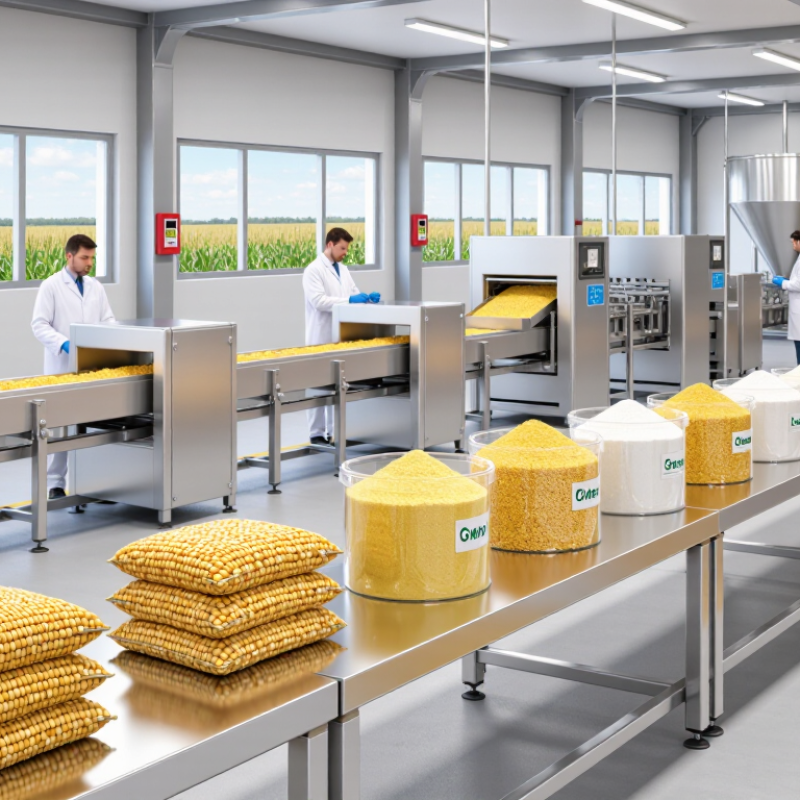
China’s Non-GMO Corn Supply: USDA 2024/25 Production and Trade Data
China’s non-GMO corn supply is gaining attention among global buyers. USDA 2024/25 data estimates China’s corn production at about 295 million metric tons. This large harvest supports corn flour, grits, starch, and other processed ingredients. However, total production does not prove non-GMO status.
USDA trade estimates place China’s 2024/25 corn imports near 8.5 million metric tons. This figure is much smaller than domestic output, showing China’s strong internal supply base. Trade volumes may change after harvest revisions, policy adjustments, or slower feed demand. Forecasts are useful, but they are not promises.
For non-GMO purchasing, buyers should request lot-specific evidence. Suitable documents include identity-preserved records, seed declarations, laboratory test results, and traceability files. A sealed shipment should also show harvest year, moisture, origin, and loading details. Testing for mycotoxins and pesticide residues remains important. Small errors can create major delays.
Chinese suppliers may offer stable access to non-GMO corn ingredients, especially when they separate storage and processing lines. Yet separation claims require verification. A practical review should compare certificates with batch numbers, sampling dates, and shipping documents. The process is not perfect. Supplier communication can also vary. Careful checks remain necessary before signing large contracts.
Product Map: Starch, Flour, Oil, Feed, and 65–70% Starch Yield
China’s non-GMO corn processing map starts with starch. USDA Foreign Agricultural Service data estimated China’s 2024/25 corn production near 294 million metric tons. That scale supports stable industrial sourcing, but origin claims still require lot-level traceability.
Wet milling can separate starch, gluten feed, germ, and fiber. Suitable corn may offer roughly 65–70% starch potential, depending on kernel quality and process control.
Actual recovery varies with moisture, impurities, steeping time, and equipment. The figure is useful, but not a promise. Buyers should request laboratory results and production records.
Starch serves food, paper, textile, and fermentation applications. Corn flour retains more of the kernel’s texture and flavor. Germ processing produces corn oil, while protein-rich feed fractions support livestock diets.
OECD-FAO Agricultural Outlook 2024–2033 identifies feed demand as a major driver of global cereal use, making feed-grade co-products commercially important.
Non-GMO purchasing needs documented seed control, segregation, cleaning validation, and independent testing. A certificate alone may not reveal transport or storage failures.
Check moisture, aflatoxin, purity, protein, and starch content before shipment. Small details matter.
Safety Benchmarks: ≤14% Moisture, Aflatoxin Limits, and GMO PCR Tests
China Best Non GMO Corn Products for Global Buyers
For global buyers, ≤14% moisture is a practical receiving benchmark for non-GMO corn products. USDA Federal Grain Inspection Service procedures identify moisture as a key grain-grade factor. A handheld meter is useful, but laboratory confirmation is safer. One wet kernel can hide inside a dry-looking shipment. Moisture migration during ocean transport also deserves attention. Sampling should cover the container’s top, middle, and lower layers, not only the surface.
Aflatoxin control needs numerical evidence. Codex CXS 193-1995 lists 20 μg/kg as the maximum level for total aflatoxins in cereals and cereal products. Some markets apply stricter limits, especially for aflatoxin B1. Buyers should request a recent laboratory report, method details, sample weight, and detection limit. A clean certificate is not enough. Storage temperature and ventilation can change risk after testing. This point is often underestimated.
Non-GMO verification should combine supply records with PCR analysis. ISO 21571 and ISO 24276 describe molecular methods and validation principles for detecting genetically modified DNA. PCR can confirm targeted sequences, but it cannot prove every possible modification is absent. Testing should use representative, sealed samples and include controls. Results should state the tested event panel and reporting threshold. Procedures vary between laboratories. That is a weakness worth discussing before shipment.
Supplier Audit: COA, Traceability, ISO 22000, and GACC Compliance
China Best Non GMO Corn Products for Global Buyers
A reliable corn supplier should prove more than a Non-GMO statement. Every lot needs a clear Certificate of Analysis, or COA, showing moisture, mycotoxins, pesticide residues, and microbiological results. The laboratory should be competent and independent. ISO 22000 certification adds structure, but it does not replace product testing. ISO’s 2023 Survey recorded thousands of ISO 22000 certificates worldwide, showing broad adoption in food safety management. Still, certificates can become outdated. Check the scope, expiry date, audit status, and production site.
Traceability should connect farm records, silo numbers, processing dates, and container seals. A simple mock recall should identify affected lots within hours, not days. This matters because WHO estimates that contaminated food causes about 600 million illnesses each year. For shipments to China, verify the supplier’s GACC registration and facility details under applicable import rules. The exporter should also provide Chinese-compliant labels and consistent lot information. Small gaps often create large delays.
Tips: Request a recent COA, not a template. Compare the COA lot number with shipping documents. Ask for one traceability exercise and review the evidence. Visit the site if volume justifies it. Remote audits are useful, but incomplete. My own audit view is cautious: perfect paperwork may hide weak controls, so inspect storage floors, pest records, and retained samples.
Source: WHO Food Safety Fact Sheet; ISO Survey 2023.
Buyer Scorecard: FOB Pricing, MOQ, Incoterms, and Container Logistics
China’s non-GMO corn products need a practical buyer scorecard, not a low-price contest. FOB pricing should state product grade, moisture, packaging, loading port, and inspection terms. Under ICC Incoterms 2020, FOB transfers risk after the goods are loaded onboard. Ocean freight remains the buyer’s responsibility. A low FOB quote can be misleading.
MOQ should match the product and packing format. Ask whether one 20-foot container is acceptable, and confirm net weight after pallets, liners, and moisture protection. USDA Foreign Agricultural Service reports global corn production above one billion metric tons annually, yet quality varies sharply by origin and season. Request recent laboratory results, non-GMO traceability records, and a clear rejection procedure. Small details matter.
For Incoterms, compare FOB with FCA, CFR, and CIF when port congestion or inland transport is uncertain. UNCTAD’s Review of Maritime Transport notes that more than 80% of world trade moves by sea, making container availability a serious cost factor. Check booking lead time, demurrage responsibility, container ventilation, and destination customs documents. China’s 2023 World Bank Logistics Performance Index score was 3.7, but this should not replace supplier-level verification. The scorecard may still miss seasonal delays. Recheck it before every shipment.
FAQS
Processing may produce starch, flour, oil, feed ingredients, gluten, and fiber. Each fraction has different uses. Starch can serve food, paper, textile, and fermentation industries. Flour keeps more kernel texture and flavor.
Suitable corn may offer about 65–70% starch potential. Actual recovery depends on moisture, impurities, steeping time, and equipment. The percentage is only an estimate. Request laboratory results and production records.
Ask for seed-control records, segregation procedures, cleaning validation, and independent testing. A certificate alone may not reveal storage or transport failures. Lot-level evidence matters more.
A recent COA should show moisture, mycotoxins, pesticide residues, microbiological results, purity, protein, and starch content. Check the laboratory’s competence and independence. Never rely on a template.
Traceability should connect farm records, silo numbers, processing dates, and container seals. Request a mock recall exercise. A strong system should identify affected lots within hours, not days.
No. It supports food safety management but does not replace product testing. Check the certificate scope, expiry date, audit status, and production site. Paperwork can look perfect.
Compare the COA lot number with shipping documents and container seals. Check moisture, aflatoxin, purity, protein, and starch content. Confirm compliant labels and required facility registration. Small discrepancies can delay clearance.
Review storage floors, pest-control records, cleaning procedures, retained samples, and production records. A site visit gives stronger evidence than a remote audit. Remote reviews remain useful, but incomplete.
Conclusion
China’s non-GMO corn sector offers global buyers a broad range of Non-GMO Corn Products, including starch, flour, oil, and animal feed. This overview examines USDA 2024/25 production and trade data while explaining how corn is processed, with starch yields commonly reaching approximately 65–70% under suitable conditions. It also highlights key quality and safety benchmarks, such as moisture levels at or below 14%, applicable aflatoxin limits, and reliable GMO PCR testing to verify non-GMO status.
For international sourcing, supplier evaluation should include a complete Certificate of Analysis, lot-level traceability, ISO 22000 or equivalent food-safety systems, and compliance with relevant GACC requirements. Buyers can compare suppliers through a practical scorecard covering FOB pricing, minimum order quantities, Incoterms, shipment schedules, container loading, and logistics reliability. By combining verified documentation, consistent specifications, transparent communication, and careful pre-shipment inspection, importers can identify dependable Chinese suppliers and build a compliant, efficient supply chain for diverse corn-based applications.

Blog Tags: