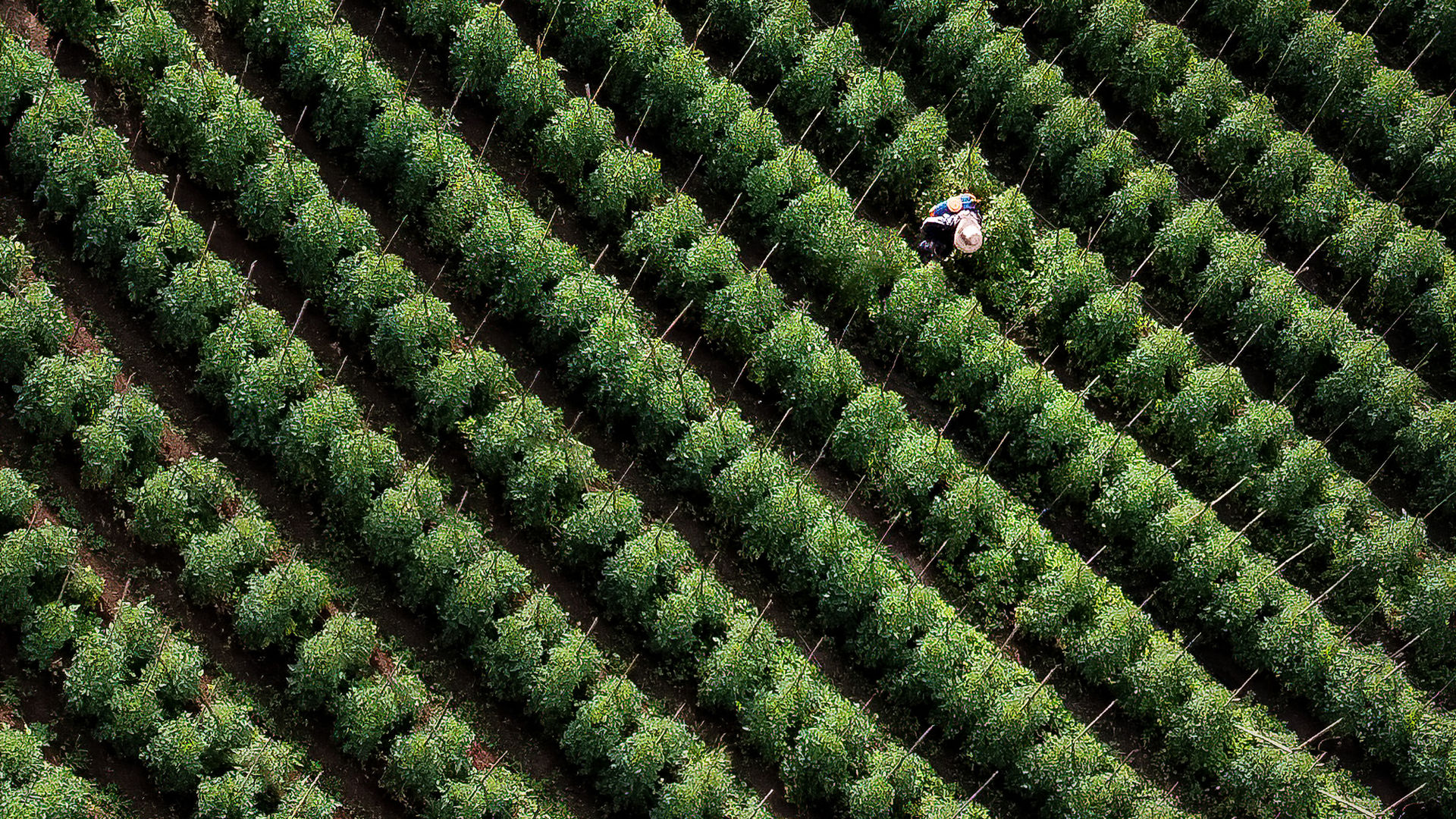
Sustainably farmed crop rows supplying organic food ingredients

Organic Ingredients Blog & Insights

Expert knowledge from a family-owned ingredient supplier with 15+ years of experience.

Sourcing Intelligence For Procurement Teams

USDA Organic, Non-GMO and natural ingredient guidance.

From Farm To Your Formulation

Tapioca, corn, rice and cane sugar ingredient deep dives.

0%

Tapioca Maltodextrin is more than a label on a powder sack. For global buyers, its source, DE value, moisture, solubility, and lot consistency can shape both production performance and finished texture. A fine, free-flowing sample may look convincing. The next shipment still needs to match.

FAOSTAT records cassava production at more than 300 million tonnes in recent years, showing the scale of the crop behind tapioca-derived ingredients. Grand View Research’s maltodextrin market analysis tracks demand across food and beverage applications, but its market figures cover maltodextrin broadly, not tapioca-derived material alone. That distinction matters. Buyers comparing suppliers should request a current specification sheet, allergen and food-safety documentation, origin details, and samples tested against their own process.

This guide reviews seven suppliers for international purchasing teams, with attention to product range, export readiness, technical support, and practical verification. Check the details. A supplier’s polished brochure cannot replace a batch certificate or a stable delivery record. I could not verify a direct, topic-specific quotation from a named Tapioca Maltodextrin expert, so I have not attributed one here; inventing an expert quote would weaken buyer confidence. Supplier information and market data can change, so confirm current specifications and availability directly before placing an order.

7 Best Tapioca Maltodextrin Suppliers for Global Buyers

Understanding Tapioca Maltodextrin and Its Global Uses

Tapioca maltodextrin is made by breaking down tapioca starch into shorter carbohydrate chains. Food manufacturers use it as a carrier for flavors, a bulking agent, or a way to adjust texture. In powdered soup, for example, it can help distribute seasoning evenly; in drink mixes, it may support quick dispersion. Results vary with the ingredient’s specifications and the manufacturing process. Small differences matter.

Its neutral flavor makes it useful in many formulations, but it is not a universal fix. A grade that works well in a dry seasoning may not deliver the same mouthfeel in a beverage. Buyers should review the product specification, moisture level, and relevant food-safety documentation. Tapioca origin alone does not confirm every dietary or labeling claim. Requirements can differ by destination market, so verify them before sourcing at scale. That step is easy to overlook.

Tips: Request a sample and test it in your actual recipe. Check how it mixes, flows, and holds up during storage. Ask suppliers for consistent batch specifications and documentation. If the powder clumps in your trial, reconsider the grade or handling conditions before changing the whole formula.

Key Criteria for Evaluating International Suppliers

For global buyers, supplier evaluation should begin with evidence, not a polished catalogue. JECFA defines maltodextrins as starch hydrolysates with a dextrose equivalent below 20. Ask suppliers to state the tapioca origin, DE range, moisture limit, particle size, and allergen controls. Request recent batch certificates of analysis and check that results match the product specification. Small discrepancies matter.

Reliable delivery also needs scrutiny. UNCTAD’s Review of Maritime Transport 2024 reported that maritime trade grew 2.4% in 2023, while warning that route disruptions can increase costs and uncertainty. Ask suppliers about lead times, port options, packaging protection, and contingency stock. Review traceability records and third-party food-safety audit scope; a certificate alone does not show how well a site handles deviations. I would also test a production sample. Paperwork can look perfect. Real batches vary.

Tip: Compare quotes on delivered cost, not price per kilogram alone. Confirm minimum order quantities, shelf life, payment terms, and document availability before approving a supplier. Then record how each shipment performs. One late delivery may be bad luck; repeated delays deserve a closer review.

Profiles of Leading Tapioca Maltodextrin Suppliers

Leading tapioca maltodextrin suppliers differ in their control of raw material, processing, and documentation. A practical comparison covers seven profiles: vertically integrated cassava processors, specialist starch converters, export-focused Asian manufacturers, regional food-ingredient distributors, custom-grade producers, smaller niche processors, and suppliers with strong technical support. FAOSTAT’s 2022 production data records roughly 330 million tonnes of cassava harvested worldwide. That scale signals a broad crop base, not guaranteed ingredient availability. Harvests, transport, and processing capacity still affect supply.

Look beyond a polished specification sheet. Ask for the dextrose equivalent, moisture limit, particle size, allergen statement, and recent microbiological results. Request a certificate of analysis for the actual production lot. Good documentation is useful. It is not a substitute for testing. The Codex General Standard for Food Additives provides a reference point for permitted additive uses; buyers should also verify requirements in their destination market. Compare suppliers on lead times, packaging integrity, and how clearly they explain product changes. A sample may perform well in a dry blend yet behave differently in a beverage. That detail is easy to miss. Supplier claims deserve scrutiny, and a low quotation alone cannot establish dependable quality.

7 Best Tapioca Maltodextrin Suppliers for Global Buyers - Profiles of Leading Tapioca Maltodextrin Suppliers

This comparison uses supplier archetypes rather than named companies: without verified, company-specific evidence, it would be misleading to present a ranked list of actual suppliers. Use the profiles below as a sourcing shortlist framework and verify each point with prospective suppliers.

Supplier Profile Typical Strength Product and Process Details to Confirm Documents to Request Best Fit for Buyers
1. Integrated cassava starch processor May offer closer coordination between cassava starch production and downstream ingredient manufacturing. Confirm that tapioca starch is the feedstock for the offered maltodextrin grade; request the product specification, DE range, and available physical forms. Product specification, certificate of analysis (COA), allergen statement, and facility food-safety certificates. Buyers prioritizing feedstock traceability and direct access to the producer.
2. Specialist carbohydrate ingredient manufacturer May focus on starch-derived ingredients and provide several functional grades for food applications. Ask how grades differ in solubility, bulk density, moisture, and other application-relevant properties; confirm the material is tapioca-derived. Current specification and COA, technical data sheet, regulatory statements, and sample information. Product developers comparing grades for formulation or processing performance.
3. Export-oriented ingredient producer May have experience preparing export documentation and coordinating international shipments. Confirm the manufacturing origin, export markets served, packaging options, lead time, and shipment terms for the destination country. Commercial invoice and packing-list capability, certificate of origin where applicable, COA, and shipping-document examples. Importers that need established export procedures and predictable order coordination.
4. Supplier with customized-grade capability May be able to discuss grade selection or product adjustments against a defined application brief. Specify the required use, target properties, and acceptance limits. Confirm whether customization is available and whether it changes minimum order quantities or lead times. Written product specification, sample-lot COA, change-control information, and agreed sample evaluation criteria. Manufacturers with specific performance requirements or a new product-development project.
5. Supplier focused on food-grade compliance May maintain documentation and quality systems designed for food ingredient supply. Verify the applicable food-grade status, intended-use suitability, manufacturing controls, and compliance with regulations in the importing market. Food-safety certificates, allergen and GMO statements where relevant, contaminant information, and market-specific compliance documents. Food and beverage buyers with formal supplier-approval requirements.
6. Bulk and high-volume supplier May be equipped to quote larger-volume orders and discuss recurring supply arrangements. Confirm available annual capacity, minimum order quantity, production lead time, packaging formats, and contingency plans; request evidence for any capacity claims. Capacity and lead-time confirmation, packaging specification, quality agreement, and recent batch COAs. Industrial buyers seeking repeat orders and consistent lot-to-lot supply.
7. Distributor or multi-origin sourcing partner May provide access to more than one producer or help consolidate ingredient procurement. Identify the actual manufacturer and country of origin for each offered grade. Confirm whether specifications and production sites can change between orders. Manufacturer identification, origin documentation, current COA, traceability details, and written change-notification terms. Buyers that value sourcing flexibility but need clear manufacturing and traceability information.

Tapioca maltodextrin is made from tapioca (cassava) starch through controlled starch hydrolysis. Before placing an order, compare the supplier’s current specification and batch COA with your application requirements, and independently verify certifications, regulatory compliance, origin, and supply capacity.

Comparing Product Quality, Certifications, and Supply Capacity

For global buyers, tapioca maltodextrin quality starts with clear, repeatable specifications. Compare dextrose equivalent, moisture, bulk density, color, and solubility against your application. A powder that dissolves smoothly in a bench test may behave differently in a large production batch. Request a recent certificate of analysis and test a representative sample. Check the date and batch number.

Certifications matter, but their scope matters more. Confirm that certificates are current and cover the relevant manufacturing site and product category. Ask about food-safety controls, traceability, allergen handling, and microbial testing. Keep the answers on record. A certificate alone does not prove every shipment will match your requirements, so compare batch documents and agree on acceptance limits before ordering.

Supply capacity is more than a large quoted volume. Ask about monthly output, minimum order quantities, standard packaging, typical lead times, and contingency plans for delays. For international shipments, confirm export documentation and whether the supplier can maintain consistent specifications across repeat orders. A small trial order can reveal practical issues, such as caking after storage or slower-than-expected paperwork. No supplier is perfect; note what remains uncertain, and verify it before scaling up.

Steps for Selecting and Verifying a Supplier

7 Best Tapioca Maltodextrin Suppliers for Global Buyers
Steps for Selecting and Verifying a Supplier

Ask each supplier for a clear specification covering dextrose equivalent, moisture, bulk density, solubility, microbiological limits, shelf life, and packaging. Request a lot-specific certificate of analysis and confirm the test methods behind each result. FAOSTAT recorded global cassava production at about 330 million tonnes in 2022. That scale supports raw-material availability, but it does not prove consistent ingredient quality. Check lot-to-lot variation.

Verify documents against practice. Review the supplier’s food-safety controls, traceability, recall procedures, and change-notification process. Test samples from more than one production lot, then compare results with an independent, accredited laboratory. For international shipments, confirm production origin, lead times, backup capacity, export documents, and protection from moisture during transit. A low quote can hide costly variation. One lesson: polished paperwork may still miss a real production-site issue.

Tips: Ask for sealed samples from recent lots. Keep your own retain sample, record the lot number, and test it under your actual mixing conditions. Not enough? Request a written corrective-action response when results fall outside specification.

FAQS

What information should I request about tapioca maltodextrin?

Ask for tapioca origin, dextrose equivalent range, moisture limit, particle size, and allergen controls. Maltodextrin has a dextrose equivalent below 20. Details matter.

Why should I review a recent batch certificate?

Request a certificate of analysis for the actual production lot. Check that its results match the product specification. A tidy document can still miss a problem.

Should I test a production sample?

Yes. Test how it performs in your intended product. A powder may blend well in a dry mix but behave differently in a beverage. Samples are useful, not perfect.

What delivery details should I confirm?

Ask about lead times, available ports, packaging protection, and contingency stock. Route disruptions can affect cost and timing. Plans can change.

How should I compare supplier quotes?

Compare delivered cost, not just price per kilogram. Confirm minimum order quantities, shelf life, payment terms, and available documents. Small charges add up.

What kinds of suppliers are available?

Options include cassava processors, starch converters, regional distributors, custom-grade producers, and smaller specialist processors. Their strengths differ. No profile guarantees a good fit.

Does high cassava production guarantee steady ingredient supply?

No. A large crop base does not ensure local availability. Harvests, transport, and processing capacity can all affect supply.

Is a food-safety certificate enough to assess a supplier?

Not by itself. Review audit scope, traceability records, and how the site handles deviations. I might trust a certificate too quickly; that deserves a second look.

Conclusion

Tapioca Maltodextrin is a versatile carbohydrate ingredient valued for its neutral taste, smooth texture, and ability to support product formulation across food, beverage, and other suitable applications. Global buyers can benefit from understanding its functional properties and common uses before comparing suppliers. A careful evaluation should consider ingredient specifications, consistency between batches, production capacity, export experience, documentation, and relevant quality certifications.

This overview introduces the qualities to look for in leading suppliers and explains how to compare product quality, certifications, and supply capabilities. Buyers can strengthen their selection process by clearly defining technical and volume requirements, requesting current product documents and samples, checking a supplier’s manufacturing and logistics arrangements, and confirming that communication and delivery expectations are practical. These steps help businesses make informed choices and build dependable, long-term sourcing relationships.

Oliver Bennett

Oliver Bennett

Oliver Bennett is a professional marketing specialist and a trusted voice behind the company’s educational content. With a strong understanding of the company’s products, services, and customer needs, Oliver transforms complex information into clear, practical, and engaging insights. He regularly......