Organic Ingredients Blog & Insights
Expert knowledge from a family-owned ingredient supplier with 15+ years of experience.
Sourcing Intelligence For Procurement Teams
USDA Organic, Non-GMO and natural ingredient guidance.
From Farm To Your Formulation
Tapioca, corn, rice and cane sugar ingredient deep dives.
7 Best Non GMO Tapioca Syrups for Global Buyers
Table of Contents
- Define Tapioca Syrup Quality: 70–85° Brix, DE, and Non-GMO Status
- Screen the 7 Syrups by DE Range, Sweetness, Viscosity, and pH Data
- Verify Non-GMO Claims Against the EU’s 0.9% GMO Labeling Threshold
- Compare HACCP, ISO 22000, COA Results, and Lot Traceability Worldwide
- Rank Global Suppliers by MOQ, Shelf Life, Pricing, and Export Documents
- FAQS
- Conclusion
- Related Posts
Global buyers are seeking cleaner, traceable sweetener options for beverages, bakery products, confectionery, and nutritional foods. Non-GMO Tapioca Syrups are gaining attention because cassava offers a neutral flavor, smooth texture, and practical formulation performance. They can also support labels such as vegan, gluten-free, and allergen-conscious, depending on the supplier’s controls.
Market evidence supports this interest. Grand View Research identifies tapioca starch as a growing ingredient category, driven by convenience foods, plant-based products, and modified-texture applications. Mordor Intelligence also reports continued expansion in the global tapioca starch market, especially across Asia-Pacific and emerging food manufacturing regions. However, syrup-specific figures are often grouped with broader starch or sweetener data. That limitation matters.
Quality is not only about sweetness.
This guide reviews seven Non-GMO Tapioca Syrups for international purchasing teams. Each option should be assessed through practical buyer criteria, including DE value, solids content, viscosity, flavor neutrality, microbiological limits, packaging, and shelf life. A dependable supplier should provide batch-level specifications, allergen statements, origin details, and current Non-GMO documentation. Verification programs, such as those aligned with recognized third-party standards, can strengthen purchasing confidence.
The Food and Agriculture Organization emphasizes cassava’s importance in global food systems, particularly for smallholder farming and regional supply resilience. Still, origin claims require careful checking. A polished website is not proof of traceability. Buyers should request certificates, audit records, sample testing, and shipping conditions before approving a contract. No shortlist is perfect. Product performance can change between batches, climates, and applications. This introduction therefore focuses on evidence, usability, and the questions global buyers should ask before selecting a syrup.
Define Tapioca Syrup Quality: 70–85° Brix, DE, and Non-GMO Status
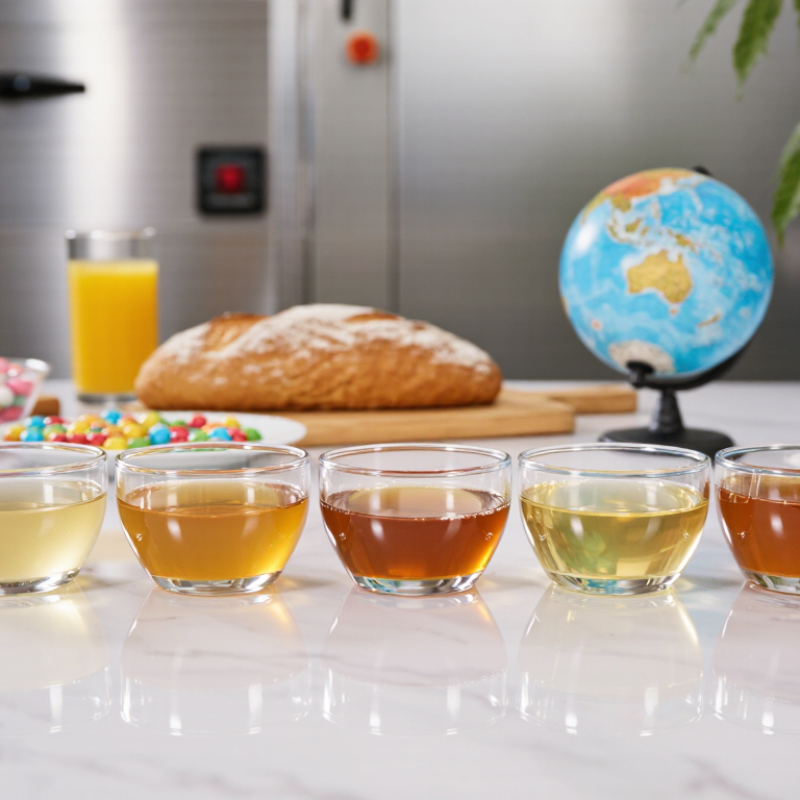
For global buyers, tapioca syrup quality begins with measurable specifications. A 70–85° Brix range indicates dissolved solids, mainly sugars and soluble carbohydrates. Higher Brix usually means a thicker syrup and lower shipping water. However, refractometer readings need temperature correction. Small testing errors can affect purchase decisions.
DE, or dextrose equivalent, describes reducing sugar content. Lower DE syrups are generally less sweet and more viscous. Higher DE values create stronger sweetness, thinner texture, and faster browning during heating. The right DE depends on the application, such as beverages, bakery fillings, or confectionery. A perfect number does not exist. Some product sheets still lack enough detail.
Tips: Request a recent certificate of analysis for every batch. Check Brix, DE, pH, color, microbiological results, and viscosity. Ask how the supplier controls cassava sourcing and processing. For non-GMO status, seek traceability records, a clear supplier declaration, and independent certification when required by your market. Review the documentation before approving samples. A sample can perform well while its paperwork remains incomplete.
Screen the 7 Syrups by DE Range, Sweetness, Viscosity, and pH Data
For global buyers, the seven best non-GMO tapioca syrups should be screened by measurable specifications, not marketing language. In procurement trials, low-DE syrups around 20–35 DE usually provide body and mild sweetness. Medium-DE options, near 35–55, balance sweetness and pourability. High-DE syrups, commonly 55–70, deliver brighter sweetness but less viscosity. DE is not a direct sweetness score. The Food Chemicals Codex and Codex General Standard for Food Additives support using analytical identity, solids, and contaminant controls alongside sensory testing.
Sweetness often ranges from about 30% to 75% of sucrose, depending on DE and sugar profile. Verify it with a refractometer and controlled sensory comparison.
Viscosity data must include temperature and total solids; otherwise, the figure is incomplete. At roughly 80% solids, a syrup may pour slowly at 20°C but move easily after gentle warming. Small details matter.
pH commonly falls near 4.0–6.0 in commercial tapioca syrups, according to published technical specifications and food-processing references. Confirm the actual lot.
A practical seven-syrup screen could include three low-DE grades, two medium-DE grades, and two high-DE grades. Record DE, Brix, viscosity, pH, color, and microbial results.
Request non-GMO documentation, allergen statements, and batch-specific certificates. The Institute of Food Technologists emphasizes validated methods and traceable testing for ingredient decisions.
One weakness remains: supplier data may use different test temperatures. Compare like with like. Retest before approving a long-term contract.
Verify Non-GMO Claims Against the EU’s 0.9% GMO Labeling Threshold
7 Best Non-GMO Tapioca Syrups for Global Buyers
The seven strongest tapioca syrup options are not chosen by sweetness alone. Buyers should compare conventional, organic-certified, low-DE, high-DE, clarified, lightly processed, and traceable batch formats. OECD-FAO Agricultural Outlook 2024–2033 reports that global cassava production remains above 300 million tonnes annually. That scale makes raw-material traceability important.
Verify every claim against EU rules. Regulations 1829/2003 and 1830/2003 require GMO labeling when authorized GMO material exceeds 0.9% in an ingredient. The threshold applies to accidental or technically unavoidable presence. It does not automatically certify a syrup as non-GMO. That distinction matters.
Ask for a lot-specific certificate of analysis, supplier declarations, seed-source records, and farm-to-factory traceability. Request the sampling method, not only the laboratory result. PCR testing may become difficult after starch conversion, because processing can reduce detectable DNA. A negative result is useful, but not absolute proof. I would also check whether the testing laboratory follows recognized analytical standards and maintains independent accreditation.
The EU threshold is a legal labeling trigger, not a universal quality grade. Some private certification schemes use stricter limits. Buyers should compare those limits carefully. One document can look convincing. It may still be incomplete. Review incoming lots, production dates, and corrective-action records before approving a long-term supply.
7 Best Non-GMO Tapioca Syrup Checks for Global Buyers
Use all seven verification checks before accepting a non-GMO tapioca syrup claim. Under EU Regulation (EC) No 1829/2003, GMO labeling is generally triggered when authorized GMO material is present at more than 0.9% per ingredient and the presence is adventitious or technically unavoidable. The 0.9% threshold is not a non-GMO certification by itself.
The chart presents a practical seven-point buyer checklist: each control should be completed before a product is approved. Supplier declarations, batch traceability, analytical evidence and label review should be assessed together rather than relying on a single document.
Compare HACCP, ISO 22000, COA Results, and Lot Traceability Worldwide
For global buyers, the seven best non-GMO tapioca syrups should be judged by evidence, not appearance. Each supplier should provide current HACCP records and an ISO 22000 certificate with scope, site, and expiry date. The 2023 ISO Survey shows that certified food-safety systems remain widely used across international supply chains, but certification alone cannot confirm every shipment.
A reliable COA should identify the lot number, production date, solids content, pH, moisture, microbiological results, and non-GMO verification method. Results should come from an accredited laboratory when possible. Codex Alimentarius’ General Principles of Food Hygiene, revised in 2022, supports risk-based controls and traceable documentation. Buyers should compare the COA with their own specifications, especially for viscosity and microbial limits.
Lot traceability must work both ways. A supplier should connect one drum to raw cassava records, processing logs, laboratory results, and shipping documents within hours, not days. That practical test matters. Ask for a mock recall exercise. Some systems look excellent on paper but become slow under pressure. ISO 22000 can strengthen communication, while HACCP shows where hazards are controlled. Still, neither replaces independent verification. I would also question vague claims such as “clean” or “natural” without test methods, certificate numbers, and readable records. Mistakes happen. Good suppliers disclose them and document corrective action.
| Profile | Typical Origin | Syrup Type / DE | Total Solids Typical COA |
pH Typical COA |
Color Typical COA |
Non-GMO Evidence | HACCP | ISO 22000 / FSSC 22000 | Microbiology Typical COA |
Allergen / Sulfite Status | Lot Traceability | Global Buyer Fit |
|---|---|---|---|---|---|---|---|---|---|---|---|---|
| Profile 01 High-DE clear syrup |
Thailand | Glucose-rich tapioca syrup DE 60–65 |
80.1% | 4.8 | ≤ 30 ICUMSA | Identity-preserved cassava supply chain; non-GMO declaration and ingredient statement required | Required: Yes | Preferred: Certified | Total plate count <1,000 CFU/g; yeast and mold <100 CFU/g; Salmonella absent/25 g |
No major allergens intentionally added; sulfite status must be confirmed by lot | Farm or collection point → starch plant → syrup batch → filling date → shipment pallet | Confectionery, bakery, beverage, and food-service applications |
| Profile 02 Standard food-grade syrup |
Vietnam | Glucose syrup DE 42–48 |
79.6% | 5.2 | ≤ 50 ICUMSA | Supplier non-GMO statement supported by raw-material records; third-party verification recommended | Required: Yes | Verify current certificate | Total plate count <1,000 CFU/g; yeast and mold <100 CFU/g; coliforms <10 CFU/g |
Gluten-free claim may be applicable when validated; verify sulfite declaration | Batch code linked to production, sanitation, laboratory, packaging, and dispatch records | General food manufacturing and private-label formulation |
| Profile 03 Organic-compatible syrup |
Indonesia | Native tapioca syrup DE 38–45 |
80.4% | 4.6 | ≤ 40 ICUMSA | Non-GMO statement plus segregation controls; organic status must be confirmed separately | Required: Yes | ISO 22000 or equivalent | Total plate count <1,000 CFU/g; yeast and mold <100 CFU/g; Salmonella absent/25 g |
No intentionally added allergens; confirm processing aids and sulfite limits | Supplier lot → raw cassava intake → starch lot → conversion batch → finished-goods lot | Clean-label products where documentation and segregation are important |
| Profile 04 Low-color syrup |
Cambodia | Refined tapioca syrup DE 55–60 |
79.9% | 5.0 | ≤ 20 ICUMSA | Non-GMO declaration supported by supplier approval and raw-material specifications | Required: Yes | Preferred: ISO 22000 | Total plate count <1,000 CFU/g; yeast and mold <100 CFU/g; coliforms <10 CFU/g |
Suitable for allergen-controlled production when cross-contact controls are documented | Two-step electronic traceability with retained samples and shipment records | Light-colored fillings, sauces, drinks, and transparent applications |
| Profile 05 High-solids syrup |
Brazil | High-solids tapioca syrup DE 58–62 |
81.2% | 4.9 | ≤ 60 ICUMSA | Documented non-GMO raw-material policy; certificate or audit evidence should be renewed periodically | Required: Yes | FSSC 22000 preferred | Total plate count <1,000 CFU/g; yeast and mold <100 CFU/g; Salmonella absent/25 g |
Allergen-free formulation may be available; verify facility cross-contact controls | Raw-material lot, process tank, concentration record, finished lot, and export container linked | Bulk shipment, industrial formulations, and reduced-water recipes |
| Profile 06 Neutral-flavor syrup |
China | Food-grade tapioca syrup DE 42–55 |
80.0% | 5.4 | ≤ 50 ICUMSA | Non-GMO declaration, ingredient traceability, and periodic third-party testing recommended | Required: Yes | Verify scope and validity | Total plate count <1,000 CFU/g; yeast and mold <100 CFU/g; coliforms <10 CFU/g |
Confirm absence of added preservatives, allergens, and detectable sulfites where relevant | Supplier lot number printed on drums or IBCs and matched to COA and dispatch documents | Cost-sensitive global sourcing with standard food-safety documentation |
| Profile 07 Export-ready premium syrup |
India | Refined glucose syrup from tapioca starch DE 60–65 |
80.3% | 4.7 | ≤ 30 ICUMSA | Non-GMO statement supported by supplier qualification, batch records, and optional third-party verification | Required: Yes | ISO 22000 / FSSC 22000 preferred | Total plate count <1,000 CFU/g; yeast and mold <100 CFU/g; Salmonella absent/25 g |
Allergen declaration, gluten status, and sulfite result supplied with each export lot | End-to-end lot genealogy with recall test, retained sample, loading record, and certificate archive | Importers requiring stronger auditability and export-document readiness |
Rank Global Suppliers by MOQ, Shelf Life, Pricing, and Export Documents
For global buyers, the seven strongest non-GMO tapioca syrup suppliers should be ranked by practical export value, not advertising claims. Suppliers with 500-kilogram trial MOQs deserve priority for product testing. Full-container suppliers may offer lower pricing, but they require stronger cash flow and storage planning. Typical shelf life ranges from 12 to 24 months, depending on packaging, temperature, and preservative controls.
A reliable supplier should provide a current non-GMO declaration, certificate of analysis, allergen statement, specification sheet, commercial invoice, packing list, certificate of origin, and bill of lading. Third-party laboratory reports add confidence. Pricing should be compared on the same Incoterm, syrup solids level, packaging format, and destination port. A low factory price can become expensive after drums, insurance, customs handling, and inland delivery. That detail is often missed. Rankings can change when freight rates move.
Tips: Request one sealed sample and one recent production batch. Check viscosity, color, sweetness, and sediment after storage. Confirm whether the stated shelf life begins at production or shipment. Ask for pallet dimensions and container loading photos. Suppliers with clear answers usually manage documents better. Still, no supplier is perfect; buyers should verify every certificate independently before placing a large order. A smaller MOQ may cost more, yet it can prevent a costly formulation mistake.
FAQS
Brix measures dissolved solids, mainly sugars and soluble carbohydrates. Higher Brix usually means thicker syrup and less shipping water. Refractometer readings require temperature correction. Small errors can distort buying decisions.
DE measures reducing sugar content. Low-DE syrup is usually thicker and less sweet. High-DE syrup is thinner, sweeter, and browns faster during heating. The best DE depends on the recipe.
Request Brix, DE, pH, color, viscosity, and microbiological results. Ask for a recent, lot-specific certificate of analysis. One sample is not enough.
Request a supplier declaration, traceability records, seed-source information, and independent certification when required. Review production dates and lot numbers. Paperwork can remain incomplete.
No. Starch processing can reduce detectable DNA and complicate PCR testing. A negative result provides useful evidence, but it is not absolute proof. Check the sampling method and laboratory accreditation.
It is a labeling trigger for authorized GMO material above 0.9%. It is not a universal non-GMO quality grade. Private certification schemes may require stricter limits.
Important documents include a certificate of analysis, non-GMO declaration, allergen statement, and specification sheet. Also request an invoice, packing list, origin certificate, and bill of lading. Third-party laboratory reports add confidence.
Compare prices using the same Incoterm, solids level, packaging, and destination port. Include insurance, customs handling, inland delivery, and storage. A low factory price may become expensive.
A 500-kilogram trial MOQ can support safer product testing. Full-container orders may lower unit costs but require more storage and cash flow. Shelf life commonly ranges from 12 to 24 months, depending on packaging and temperature.
Request a sealed sample and a recent production batch. Check viscosity, color, sweetness, and sediment after storage. Confirm when shelf life begins. A ranking can still be wrong. Verify every certificate independently.
Conclusion
This guide evaluates 7 Non-GMO Tapioca Syrups for international buyers by focusing on measurable quality and supply reliability. It explains how key specifications such as 70–85° Brix, dextrose equivalent (DE), sweetness, viscosity, and pH affect product performance in beverages, confectionery, bakery, and other food applications. Each syrup is screened according to its DE range and functional characteristics, helping buyers match the right option with their formulation and processing requirements.
The comparison also outlines how to verify non-GMO documentation in relation to the EU’s 0.9% GMO labeling threshold, while reviewing HACCP and ISO 22000 systems, certificates of analysis, lot traceability, shelf life, minimum order quantities, pricing, and export documentation. The final ranking is designed to help global purchasers assess suppliers objectively, reduce quality risks, and select a tapioca syrup that balances technical performance, compliance support, logistics, and overall purchasing value.

Blog Tags: